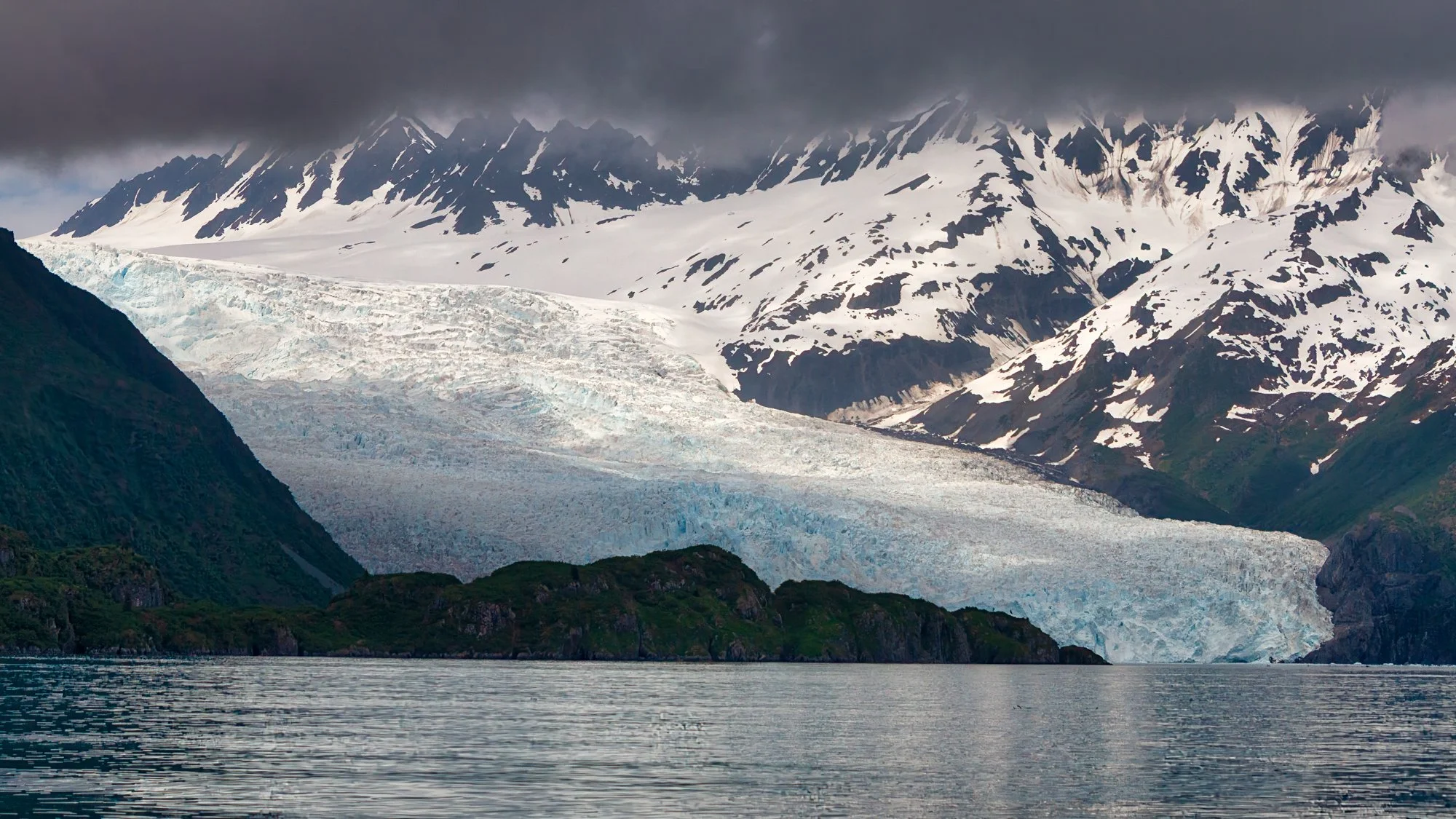
Calving Glacier
The word calve originally means for an animal, like a cow or whale, to give birth to a calf. Glaciers use the same idea: when ice breaks away from the front edge of a glacier into the ocean, lake, or fjord, that new piece becomes an iceberg or floating ice chunk.
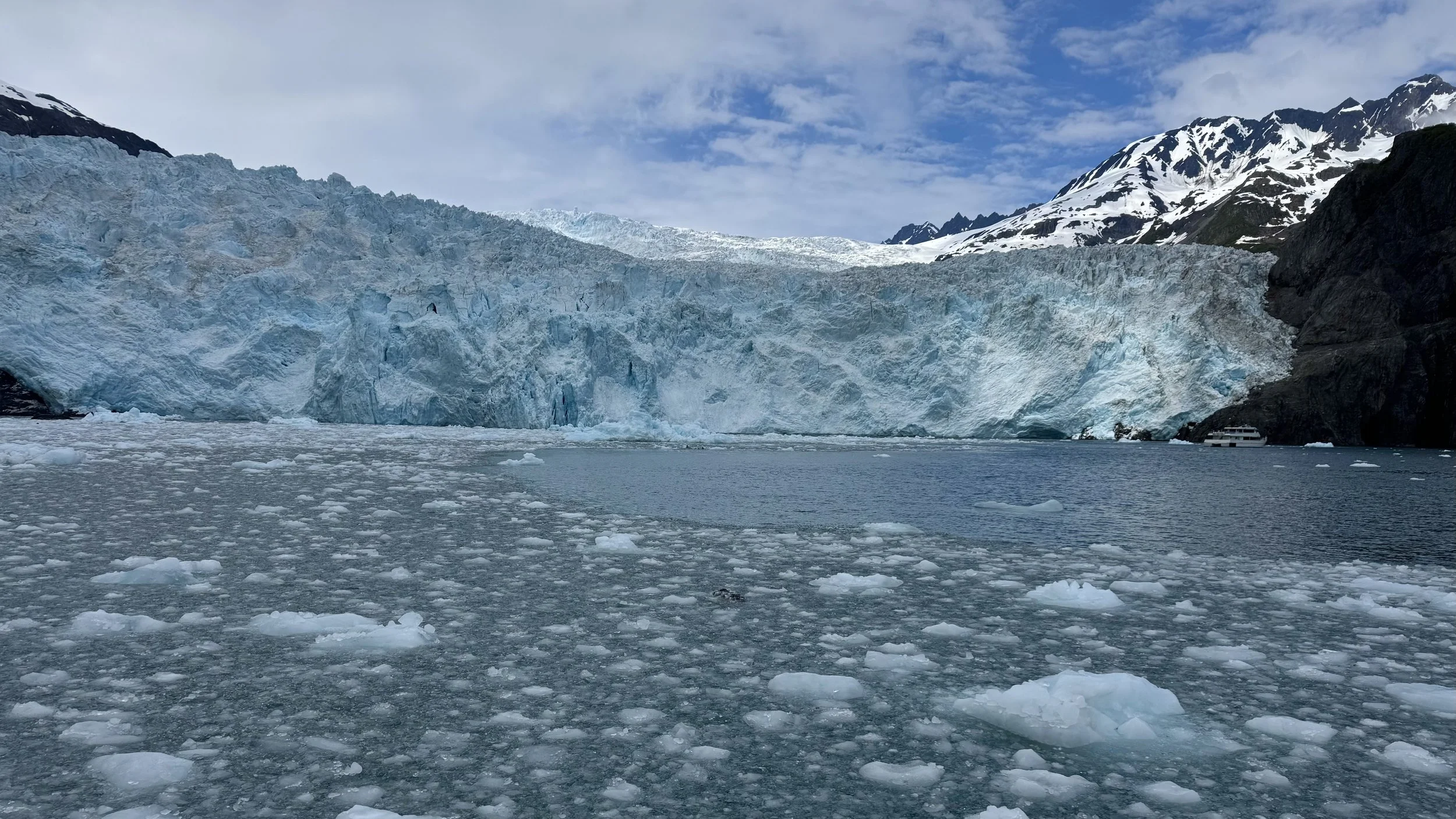
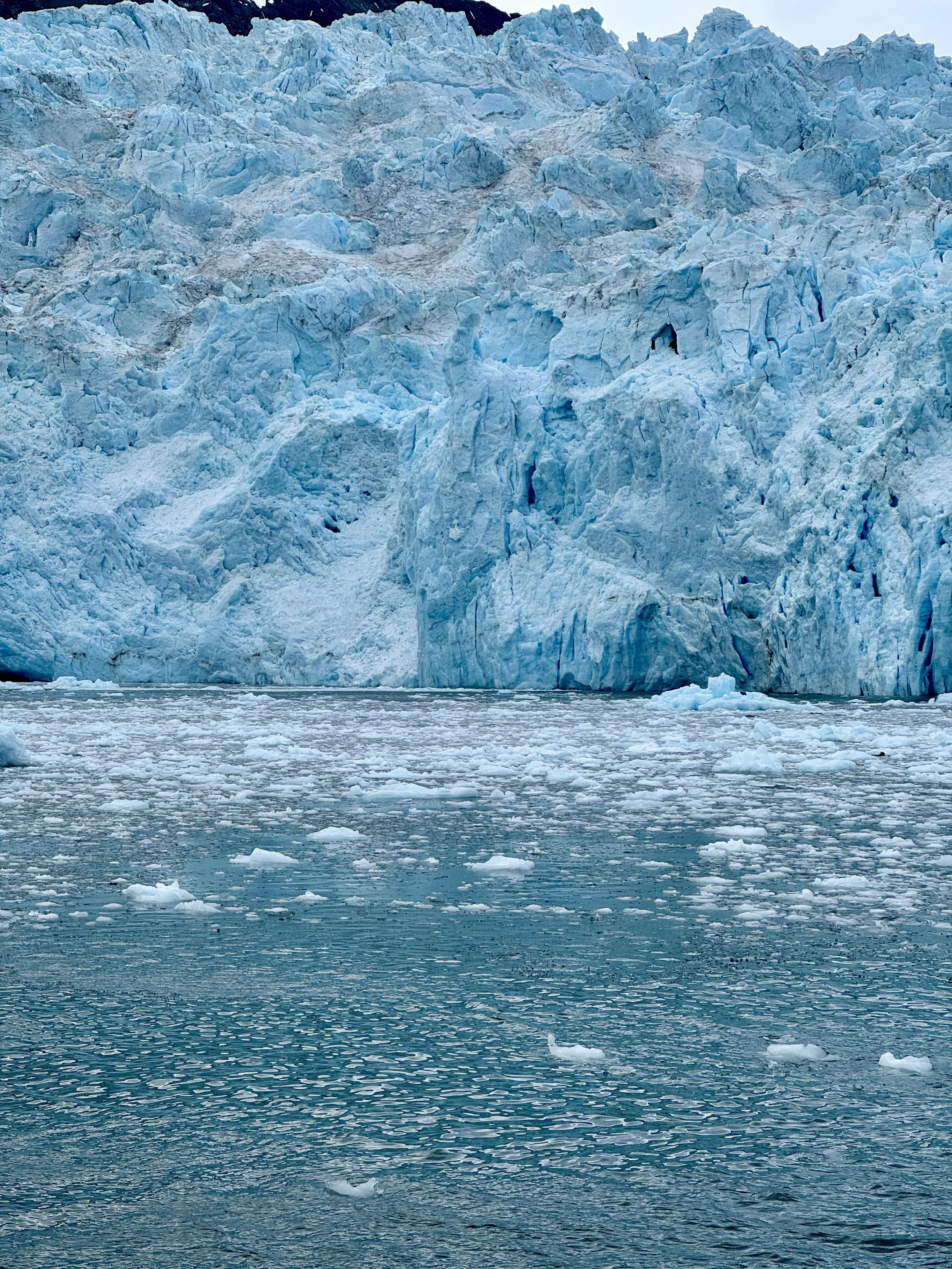
Holgate Glacier
A tidewater glacier in Kenai Fjords National Park, near Seward, Alaska. It flows down from the Harding Icefield into Holgate Arm of Aialik Bay.
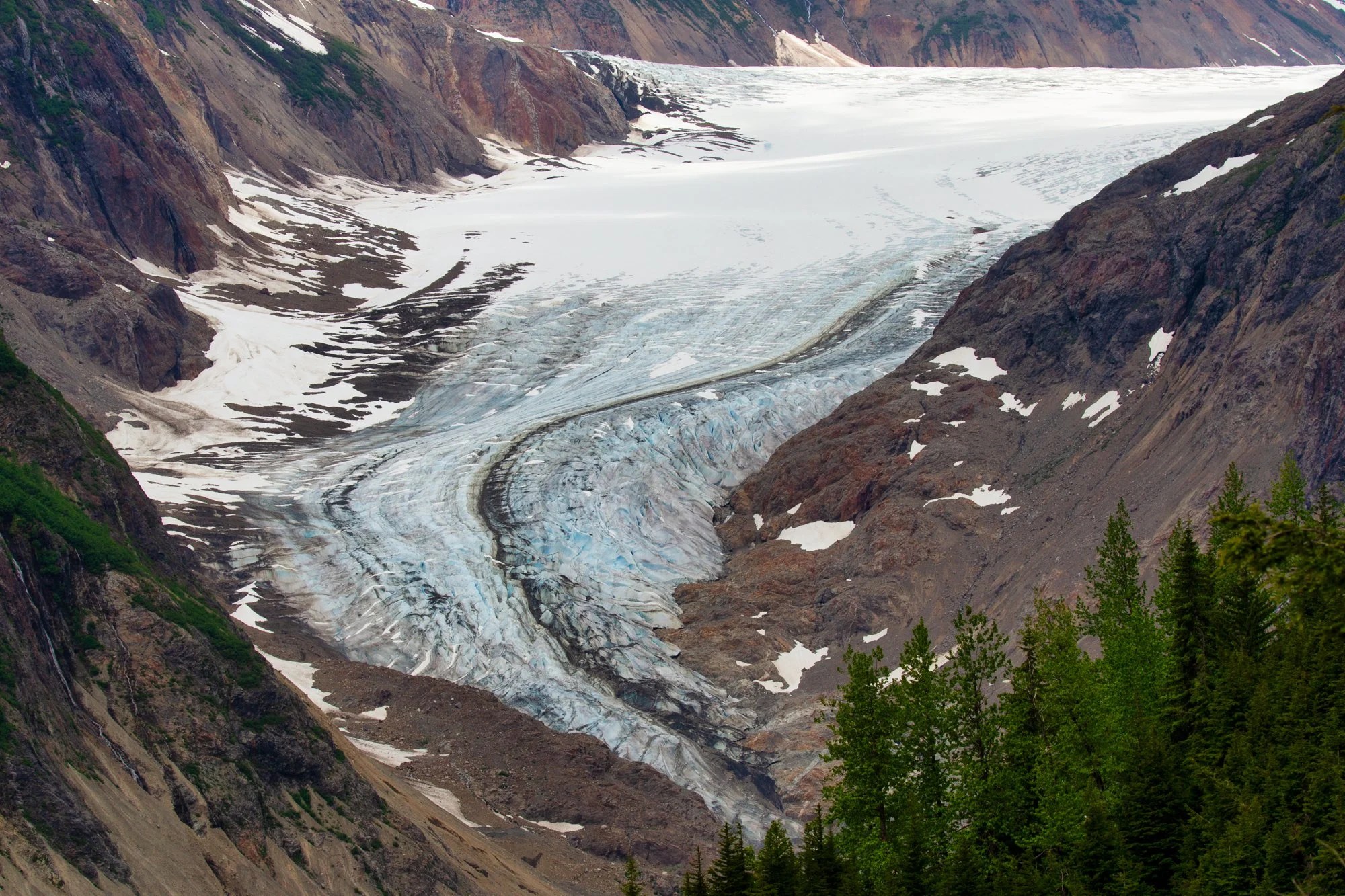
Salmon Glacier
Salmon Glacier is one of the most spectacular glaciers you can drive near in northwestern British Columbia, close to Stewart, BC and Hyder, Alaska. It sits in the Boundary Ranges of the Coast Mountains, in a wild area of steep peaks, waterfalls, old mining roads, and bear country.
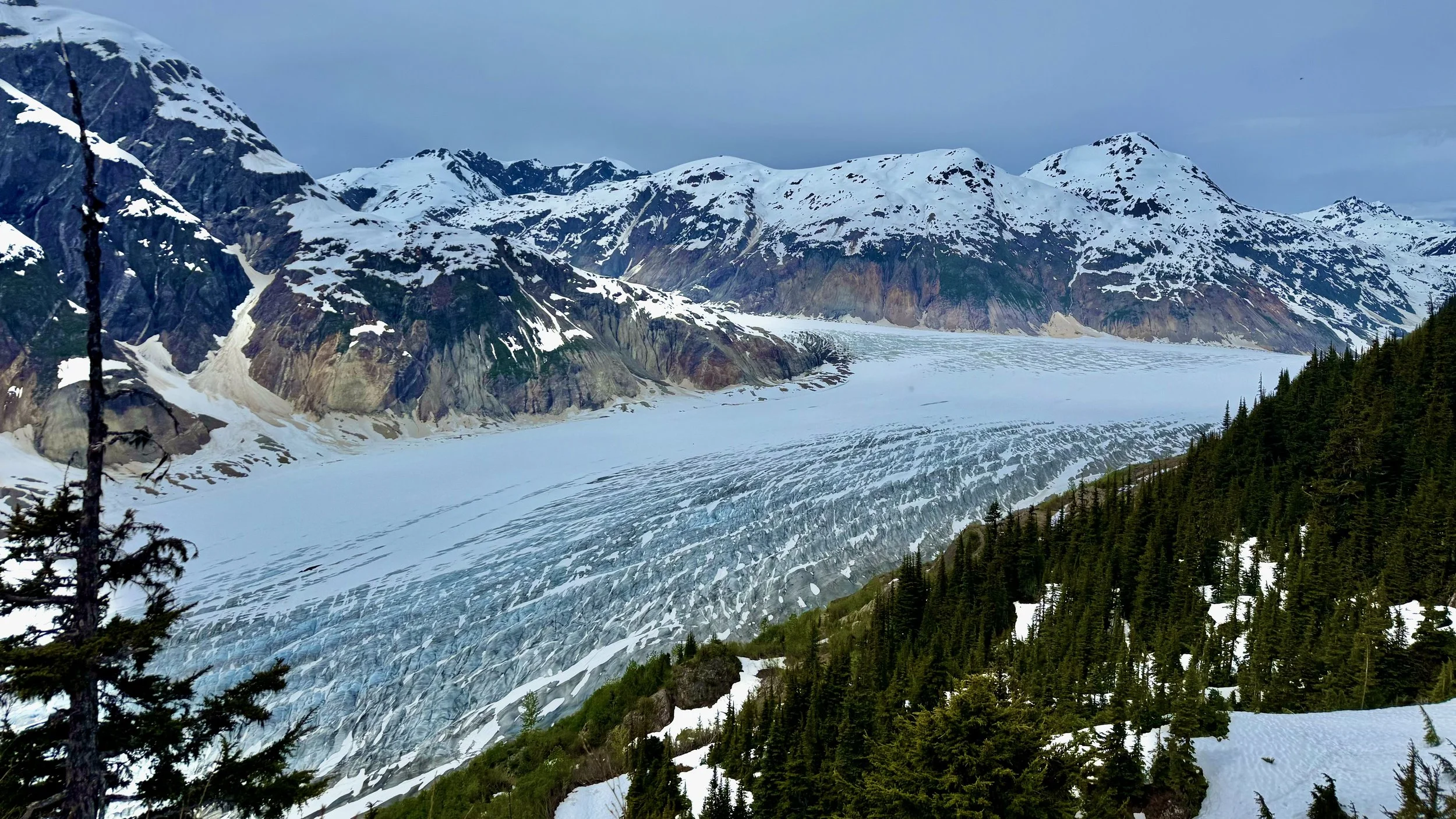
A View From Above
Salmon Glacier is often described as one of the largest road-accessible glaciers in North America. From the upper viewpoint, you can see its broad white-and-blue ice field, dark moraine stripes, crevasses, and the valley it carved over thousands of years.
It is one of those places that feels remote, dramatic, and almost unreal—the kind of stop that makes a northern BC/Alaska road trip unforgettable.
Aialik Glacier
Aialik Glacier is one of the big glacier highlights of Kenai Fjords National Park, southwest of Seward, Alaska. It flows from the Harding Icefield down into Aialik Bay, making it a tidewater glacier—a glacier that reaches the ocean and drops ice directly into seawater.
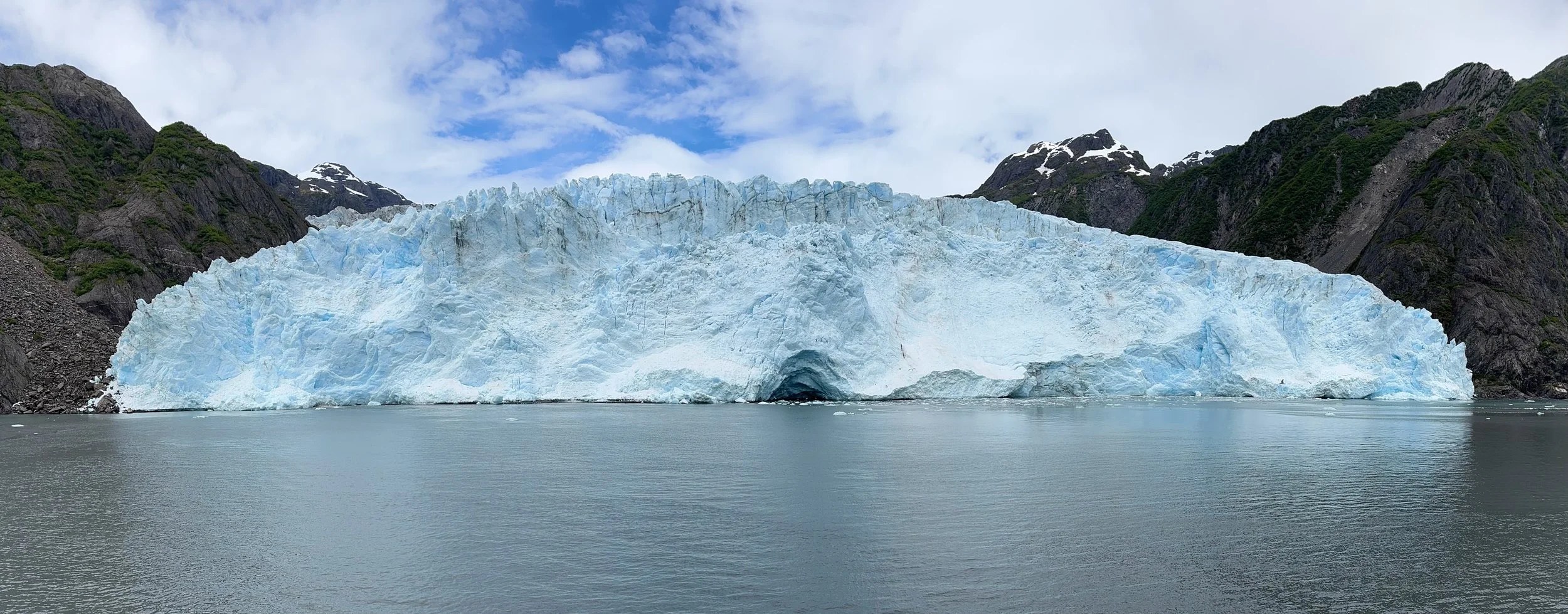
Kenai Fjords National Park
Many Alaska glaciers are retreating, Holgate has been noted for periods of advance, which can happen as part of a tidewater glacier cycle influenced by the shape of the fjord and sediment buildup at the glacier’s face.